Table of contents
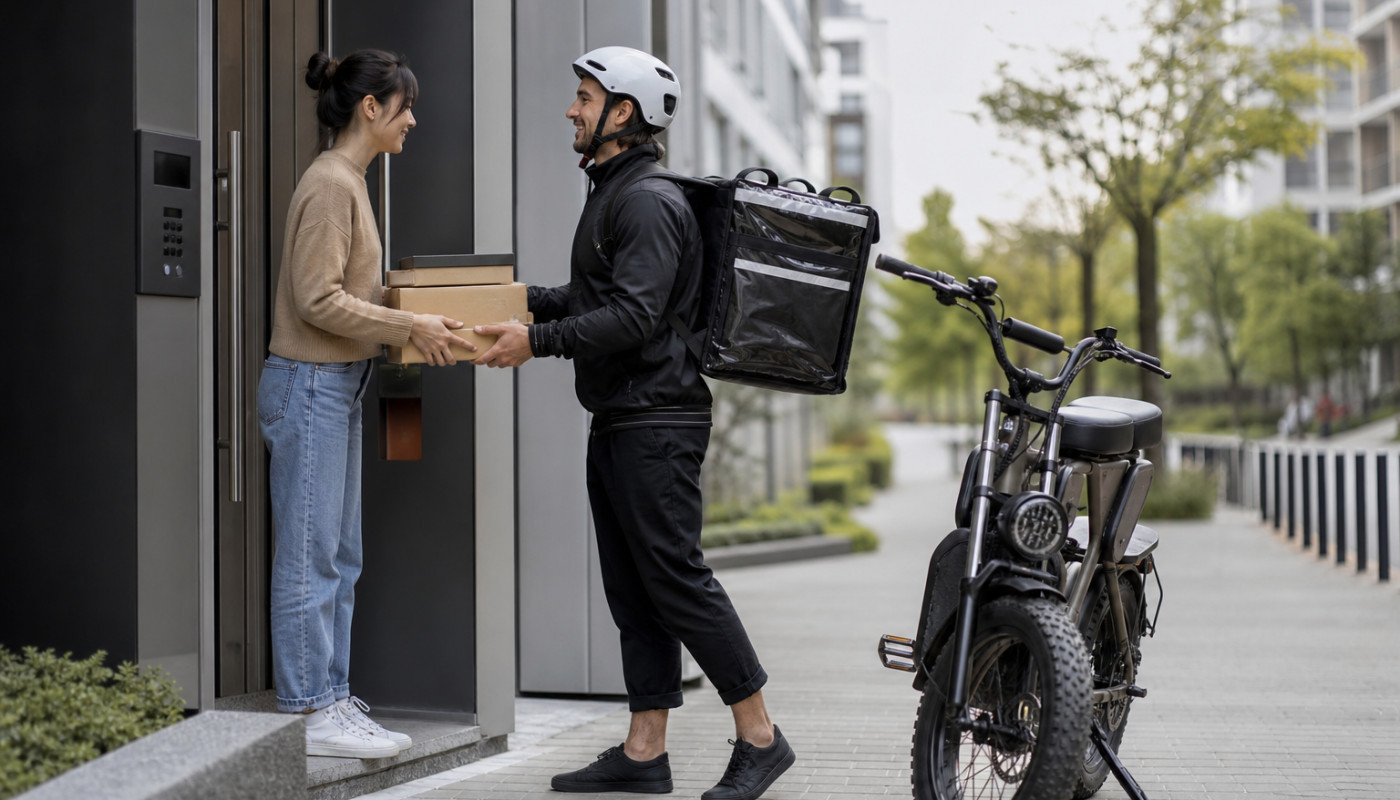
Vans stopping in bike lanes, couriers zigzagging between double-parked cars, and apartment lobbies stacked with parcels: last-mile delivery has become the daily stress test of urban e-commerce. After years of “faster at any cost”, cities and retailers are rethinking the final kilometre, because congestion, labour shortages, failed deliveries, and tightening regulation are turning speed into a liability. The new playbook is about density, predictability, and smarter handoffs, and it is already reshaping what shoppers expect, what merchants can promise, and what urban logistics can realistically sustain.
Speed is losing to reliability
How fast is “fast” when the package does not arrive? Across major cities, the last mile is where delivery promises collide with reality, because traffic, building access, and customer availability are messy variables that algorithms still struggle to tame. The result is costly: every failed first attempt triggers re-delivery, extra kilometres, customer service contacts, and sometimes refunds. Operators rarely publish failure rates in a comparable way, yet industry studies routinely point to first-attempt delivery failure being a meaningful cost driver in dense neighbourhoods, especially where access codes, lifts, and concierge hours complicate drop-offs, and where theft risk forces couriers to choose between speed and care.
This is why many platforms are quietly shifting their obsession from record-breaking lead times to dependable, trackable windows, and why “two-hour delivery” is being re-engineered into narrower, better-managed slots rather than a constant on-demand scramble. Reliability is also becoming a competitive advantage for merchants, because customers remember the delivery that went wrong more than the one that arrived marginally quicker. Retailers are learning to design promises around local constraints: in practice, that means offering fewer, clearer options, pricing them properly, and using data to steer customers toward the cheapest successful outcome. The clever part is not shaving minutes, it is reducing variance, because variance is what inflates costs and breaks customer trust.
The curb has become a battleground
The most valuable square metres in last-mile logistics are not warehouses, they are curbside metres. In many city centres, the limiting factor is no longer how many parcels a company can process, but how many lawful, efficient stops it can make without blocking traffic or collecting tickets. Municipalities are responding with stricter enforcement, low-emission zones, timed access restrictions, and, in some cases, designated loading bays that can be booked digitally. These policies are not just “green” messaging; they are direct attempts to reclaim streets from a delivery model that scaled faster than urban planning could adapt.
For carriers and e-commerce brands, the curbside crunch is pushing operational redesign. Route planning has to account for legal stopping time, not just distance, and fleet strategy is evolving accordingly, with cargo bikes and compact electric vans expanding in areas where they can genuinely outperform larger vehicles. Micro-depots, meanwhile, are returning as a practical tool: place inventory or cross-docked parcels closer to demand, then finish the route with lighter vehicles that can park, manoeuvre, and comply. This approach can reduce kilometres driven and improve drop density, but it only works when real estate, staffing, and local permitting align, which is why it tends to appear first in neighbourhoods with high order volumes and supportive city policy.
Lockers and pickup points are going mainstream
Home delivery still dominates the imagination of online shopping, yet the economics increasingly favour “out-of-home” delivery, because it collapses many doorsteps into one secure handoff. Parcel lockers, staffed pickup counters, convenience-store networks, and click-and-collect at retail locations are spreading for a simple reason: they reduce the cost of the hardest part of the last mile, the unpredictable final approach to a specific door at a specific time. When dozens of parcels can be delivered in one stop, labour productivity rises, re-delivery rates fall, and theft risk can drop, depending on the design and placement of the network.
The consumer trade-off is real: someone has to walk the last few hundred metres. But in dense cities, that distance is often acceptable, and increasingly framed as a service feature rather than a downgrade, because it gives customers control over timing. Retailers also like the visibility: pickup networks generate predictable flows, and they can drive footfall to partner stores. The challenge is coverage and trust; networks must be close enough to matter, accessible for people with limited mobility, and reliable in terms of opening hours and security. Where that trust exists, adoption tends to accelerate quickly, especially when platforms nudge customers with small discounts, loyalty points, or clearer delivery-time guarantees tied to pickup.
China’s supply chain forces hard choices
Urban delivery does not end at the city boundary, because the pressure of the last mile starts upstream, with inventory positioning, lead-time expectations, and the way sellers source products. Nowhere is that linkage clearer than with China-focused e-commerce, where merchants often mix cross-border shipping, local fulfilment, and a patchwork of third-party partners. The temptation is to add intermediaries until the problem “goes away”, yet each handoff introduces delay, cost, and accountability gaps, and those gaps surface at the doorstep as missed windows, surprise duties, or inconsistent tracking.
That is why procurement and distribution strategy is becoming a last-mile decision, not just a sourcing one. Sellers who want reliable urban delivery are learning to simplify their partner stacks, verify counterparties properly, and prioritise distributors with proven processes over those who merely promise scale. The distributors that are genuinely worth working with in China do not need your product, and that uncomfortable reality is often a useful filter, because it highlights which partners have stable demand, compliance discipline, and the operational maturity to deliver consistently. In a market where counterfeits, grey channels, and documentation errors can derail timelines, the “best” partner is frequently the one that insists on standards, audits, and clear commercial terms, even if that slows onboarding.
The strategic payoff is measurable. When inventory and paperwork are right, urban fulfilment becomes less chaotic: fewer exceptions, fewer customer complaints, and fewer costly manual interventions. When they are wrong, last-mile teams spend their days firefighting, because no route optimisation can fix missing customs data, mislabelled cartons, or unpredictable replenishment. In other words, the last mile is being transformed not only by bikes, lockers, and loading zones, but also by quieter decisions about who holds stock, who clears compliance, and who is accountable when something goes off-script.
What to do before peak season hits
Plan early, then be specific: reserve carrier capacity, test locker or pickup options, and stress-test tracking and customer notifications before volumes spike. Build a realistic budget that prices in failed deliveries, returns, and customer service, and use incentives to steer shoppers toward the most reliable option.
Finally, check local support: cities and governments increasingly offer grants or tax advantages for low-emission fleets, and some landlords will co-finance secure parcel rooms. The best last-mile upgrade is the one you can actually operate, day after day, at peak load.
Similar

Lessons Learned: What Recent Corporate Investigations Reveal About Risk Oversight

Exploring Cost-Effective Fundraising Platforms For Charitable Organizations

Examining the Economic Impact of the Marijuana Industry in Washington

Evaluating the Performance of International Online Casinos: A Case Study of Nine Casino